


Recruiting Chatbot Trends Shaping the Future of Hiring
Read Time
7 Minutes
Updated On
April 21, 2026
.jpeg)


Hiring has always been a people business. But somewhere between screening hundreds of resumes, answering the same candidate questions on repeat, and trying to coordinate interview schedules across three time zones, recruiters started spending more time on admin than on actually finding great people.
That's where recruiting chatbots come in. Not as a replacement for human judgment, but as the extra set of hands that handles the repetitive stuff so recruiters can focus on what actually moves the needle.
And they've gotten genuinely good at it.
This blog breaks down the chatbot recruiting trends transforming how we hire and what it means for recruiting teams trying to move faster without losing the personal touch.
Understanding what modern recruitment chatbot AI can handle helps you see why they've become essential tools rather than annoying gimmicks that candidates hate.
AI recruitment chatbots have evolved far beyond basic FAQ responses. Today's chatbots engage candidates in natural conversations, understanding intent and context rather than just matching keywords. They handle complex recruiting tasks that previously required human recruiters to be constantly available.
Candidate Engagement and Screening - Modern chatbots greet candidates when they visit your careers page, answer questions about roles and company culture, pre screen applicants with qualifying questions, and capture contact information from interested candidates. This happens instantly whether it's 3pm or 3am.
Interview Scheduling - Instead of endless back and forth emails finding interview times, chatbot recruiting systems check everyone's calendars, propose available slots to candidates, book interviews when candidates select times, send confirmations and reminders, and handle rescheduling requests automatically.
Application Status Updates - Candidates constantly wonder where they stand. Chatbots provide instant status updates, explain next steps in the process, set expectations for response timelines, and notify candidates of decisions. This keeps people informed without recruiters answering the same questions repeatedly.
FAQ Automation - Every role generates the same questions. Chatbots answer common inquiries about compensation ranges, work arrangements, benefits, application requirements, and company culture instantly. This frees recruiters from being a human FAQ database.

Watching how chatbots in recruitment are evolving shows where hiring is headed and what capabilities recruiting teams should expect from modern tools.
The biggest trend is chatbots that understand natural language like humans do. You don't need to ask questions in specific ways. The AI chatbot for recruitment understands "Do you guys work from home?" and "What's your remote policy?" and "Can I work remotely?" as the same question and provides consistent helpful answers.
This natural conversation capability means candidates actually want to engage with chatbots instead of avoiding them or getting frustrated by rigid scripted responses that don't help.
Modern recruiting chatbots personalize interactions based on who they're talking to. A software engineer gets asked about technical skills and shown relevant tech roles. A marketing candidate sees marketing positions and gets asked about campaign experience. The chatbot adapts its conversation to each person instead of treating everyone identically.
Personalization extends to remembering past interactions. If a candidate applied before, the chatbot recalls that and adjusts its approach accordingly.
Instead of just responding when candidates reach out, advanced chatbots proactively engage. They follow up with candidates who started applications but didn't finish. They check in with people who interviewed to see if they have questions. They notify past applicants when new relevant roles open.
This proactive nurturing keeps candidates engaged throughout long hiring processes and builds talent pools for future needs.

Smart chatbot recruiting knows when to involve humans. When conversations get complex, when candidates have concerns chatbots can't address, or when it's time for actual relationship building, the best systems smoothly transition to human recruiters with full context of the conversation.
This hybrid approach delivers instant responses when appropriate while maintaining human connection when it matters.
Chatbots no longer live in isolation on careers pages. They integrate throughout recruiting workflows. They work within your ATS to update candidate records automatically. They connect to calendaring systems for scheduling. They sync with communication platforms. Everything flows together instead of requiring manual data transfer between systems.
Getting value from recruitment chatbot AI requires implementing them thoughtfully rather than just turning on a tool and hoping it works.
Successfully deploying chatbots in recruitment means following proven approaches that balance automation with human touch. Start by identifying which conversations chatbots should handle versus which need human recruiters. Not every interaction belongs with a bot.
Be transparent that candidates are talking to AI. People appreciate honesty and knowing what to expect. Train your chatbot on your actual recruiting process, not generic responses. It should answer based on your real policies, timelines, and culture.
Establish escalation paths for complex questions. The chatbot should know when to say "let me connect you with a recruiter who can help with that" instead of providing inadequate automated responses.
Configure your AI chatbot for recruitment to reflect your company personality. If your brand is casual and fun, the chatbot should match that tone. If you're formal and professional, the bot should align. Consistency in voice builds trust and reinforces brand identity.
Chatbot recruiting fails when information goes stale. If your remote work policy changes, update the chatbot immediately. When salary ranges shift, change bot responses. Assign someone to maintain chatbot content regularly so candidates always get current accurate information.
Review chatbot conversations regularly. Which questions do candidates ask most? Where does the bot struggle? What causes frustration? Use these insights to improve responses and add new capabilities. Effective chatbot recruitment requires ongoing refinement based on real usage.
Use chatbots for efficiency on repetitive tasks but keep humans involved in relationship building. Let bots handle scheduling and basic questions. Have humans conduct actual interviews and make hiring decisions. The best practices for HR using AI chatbots in recruitment involve knowing what to automate and what requires personal attention.

Understanding the measurable impact helps justify chatbot investments and shows how they deliver real value beyond just convenience.
AI recruitment chatbots directly improve key recruiting performance indicators in ways that affect your bottom line and hiring success.
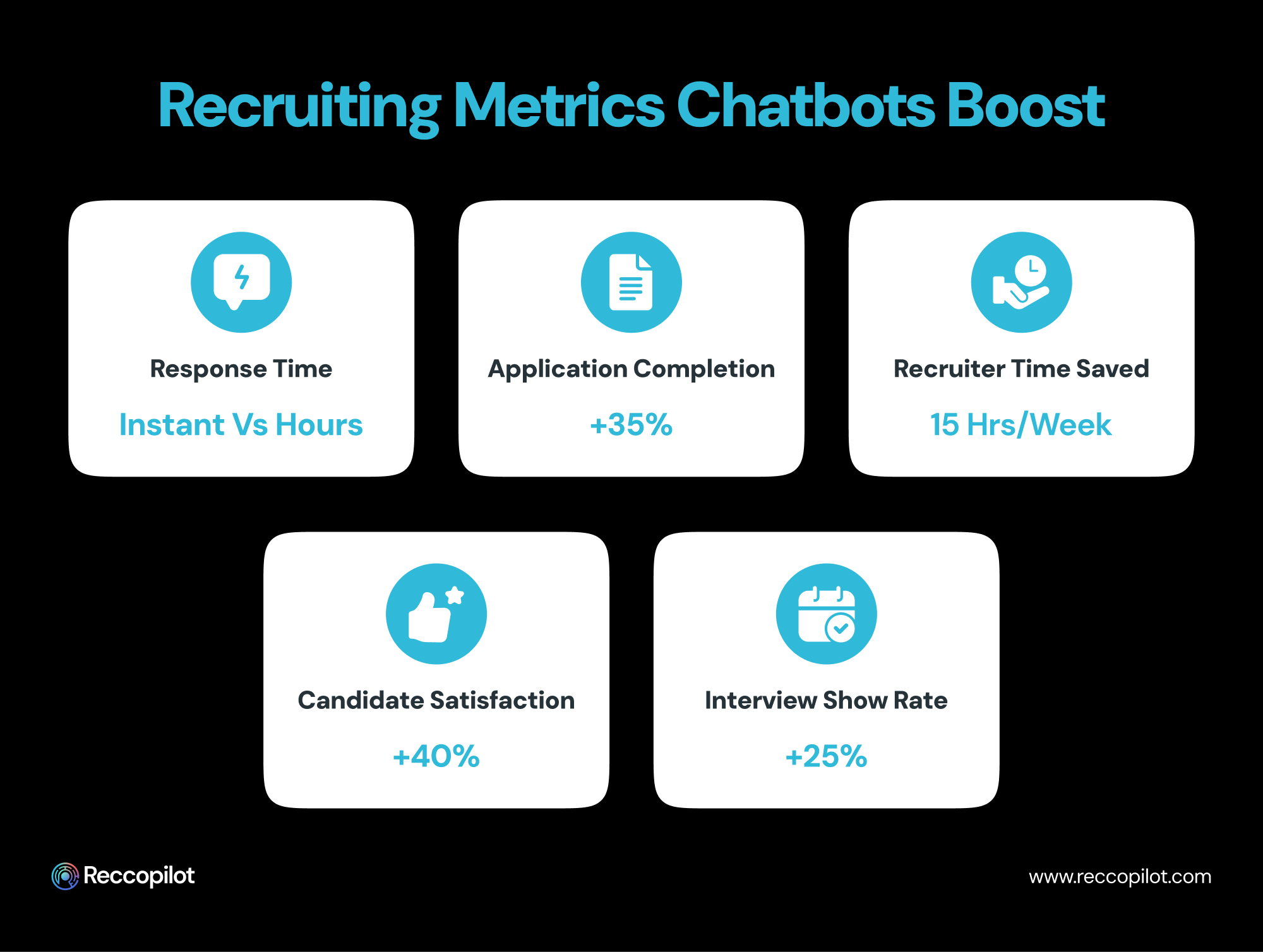
Looking ahead shows where recruiting chatbot technology is headed and what capabilities will soon become standard expectations rather than cutting edge features.


Recruiting chatbots represent a fundamental shift in how we engage candidates and manage recruiting workload. The teams seeing the biggest benefits aren't just implementing technology. They're rethinking which tasks need human attention versus which benefit from instant automated responses.
We're not replacing recruiters with bots. We're giving recruiters their time back to focus on what humans do best. Building relationships, making judgment calls, selling opportunities, and providing the personal touch that convinces great candidates to join your company.
The chatbot recruiting trends for 2026 show clear direction. Instant availability, natural conversations, personalized experiences, and seamless integration throughout hiring workflows. These aren't future possibilities. They're current capabilities that forward thinking recruiting teams are already using to hire faster while improving candidate experience.
The question isn't whether to use chatbots in recruitment. It's whether you'll adopt them before your competitors do and gain the advantages of instant candidate engagement and freed up recruiter time.




